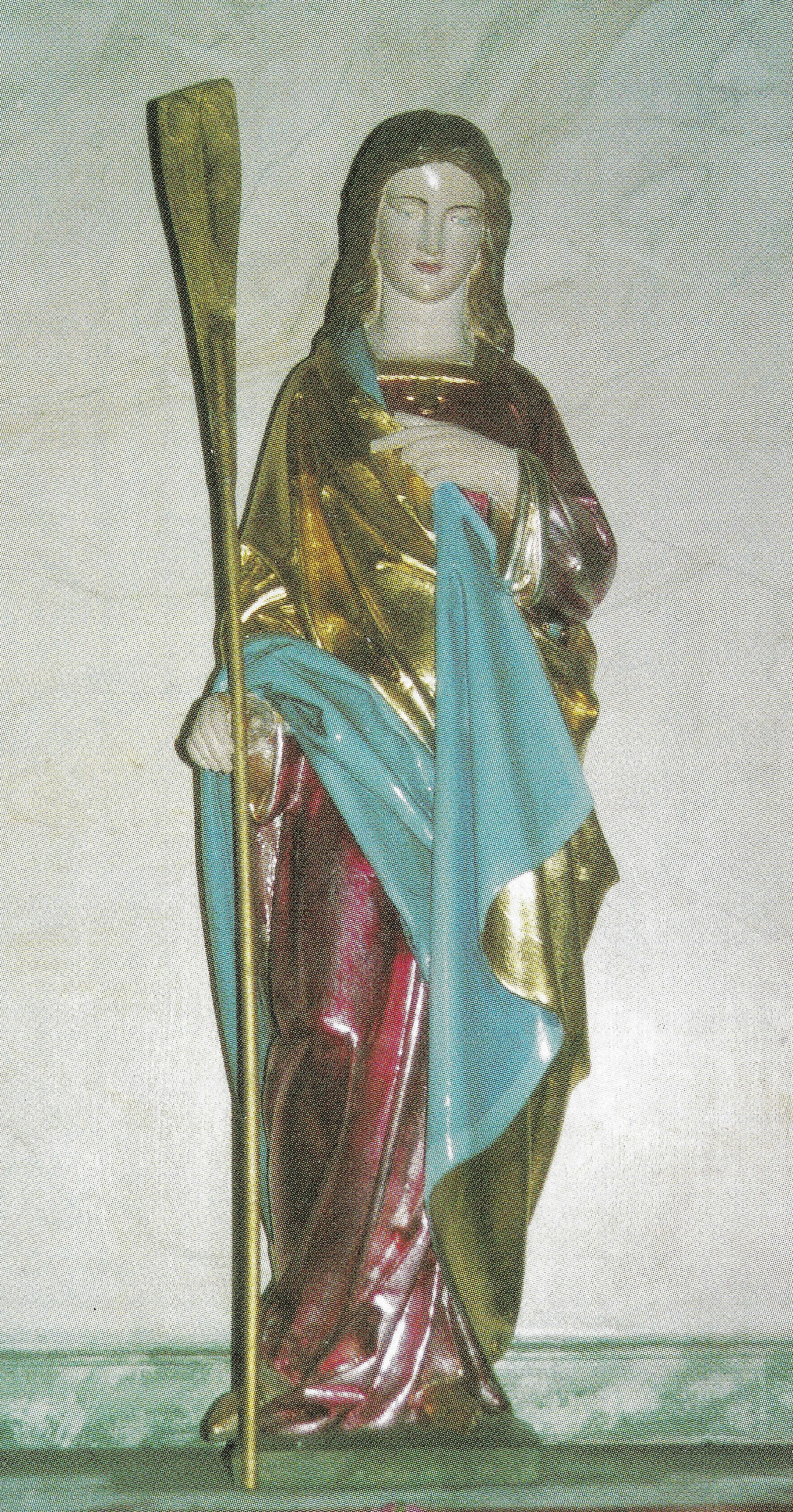
🕊️ Martyr c. 362
📍 Place: Grand (Vosges)
👨👩👦 Parents: Baccius and Lientrude, nobles of Toul
👦 Brother: Saint Élophe (beheaded at Soulosse)
🏺 Relics: shrine at Grand (Vosges)
⚔️ Persecutor: Julian the Apostate
The life of Saint Libaire
1. Origins and family
Libaire was the daughter of Baccius and Lientrude, nobles of the city of the Leuci at Toul (present-day Lorraine). She belonged to a "noble family of Germania" according to the chroniclers. Her brother, Saint Élophe, was beheaded at Soulosse-sous-Saint-Élophe (Vosges) and, according to tradition, he too carried his head after his death.
2. Life at Grand
Libaire lived at Grand, a great spa town in the Vosges, frequented by Roman officers and dignitaries. She tended sheep and spun wool — the image of a pious and hardworking young woman, despite her noble birth.
3. The encounter with Julian the Apostate
The emperor Julian the Apostate (331–363), nephew of Constantine and the last Roman emperor to reject Christianity, was staying at Grand during a military expedition. Struck by Libaire's beauty, he attempted to win her over. She refused, steadfast in her Christian faith.
Julian had her imprisoned and then condemned to death by beheading. She was led along the road to Soulosse, where her brother Élophe was awaiting the same fate.
"Blessed are those who are persecuted for righteousness, for theirs is the kingdom of heaven."Matthew 5:10
4. The miracle — cephalophory
According to hagiographic tradition, after being struck down, Libaire stooped, picked up her head and returned to Grand to wash it in a spring before dying. She was then buried outside the town.
This type of account, in which a martyr carries their own head after beheading, is known as cephalophory. It appears in the legends of other celebrated saints such as Saint Denis of Paris. It symbolises the victory of the soul over bodily death.
The relics at Grand
The relics of Saint Libaire are preserved in a shrine at Grand (Vosges).
